












Best Way to Send Crypto Abroad as Cheaply as Possible October, 2026
Crypto has no borders. A transfer to the next street and a transfer to the next continent cost the same.
Banks do not work like that. Neither do most money transfer services. That is why people send crypto abroad. But the cheapest way is not always the obvious one.
The Short Answer
Send a stablecoin such as USDT or USDC over a low-fee network. Tron, Solana and Ethereum layer 2s like Arbitrum and Base are common choices. Or send Bitcoin over the Lightning Network if both sides support it.
Then watch the other costs. The network fee is often the smallest part.
By the Numbers
Numbers do not comfort anyone. But they do tell you what is normal. Here is what the data says. Feel free to quote it. Link back when you do.
• 6.35%. The global average cost of sending $200 abroad in Q1 2024. The UN target is 3%. (World Bank Remittance Prices Worldwide)
• 4.96% vs 6.94%. The average for digital remittances versus non-digital ones, Q1 2024. (World Bank Remittance Prices Worldwide)
• About 40%. The share of the average remittance cost that comes from the exchange rate margin, in Q1 2023. (World Bank Remittance Prices Worldwide)
• $20 billion. What families would save each year worldwide if costs fell below 3%, according to the UN and World Bank. (World Bank Data Blog)
• About 40%. The average fee saving reported by people who receive payments in stablecoins, compared with traditional services. (BVNK and YouGov, 2026 survey of 4,658 adults in 15 countries)
• $0.03 to $0.10. Typical fees on BNB Chain. (Stablecoin Insider, 2026)
Look at the exchange rate margin again. About 40% of the cost can hide there. That is why the cheapest fee on the screen is not always the cheapest transfer.
Where the Money Really Goes
Sending crypto abroad is not one fee. It is a chain of them.
• Buying. The exchange charges a fee and a spread.
• Withdrawing. The exchange charges a flat fee to send coins out.
• The network. Miners or validators take a fee.
• Selling. The receiver pays a fee and a spread again.
• Cashing out. Converting to local currency and sending to a bank can cost more.
Add them up. That is your real cost. A cheap network fee means nothing if the exchange takes three percent at each end.
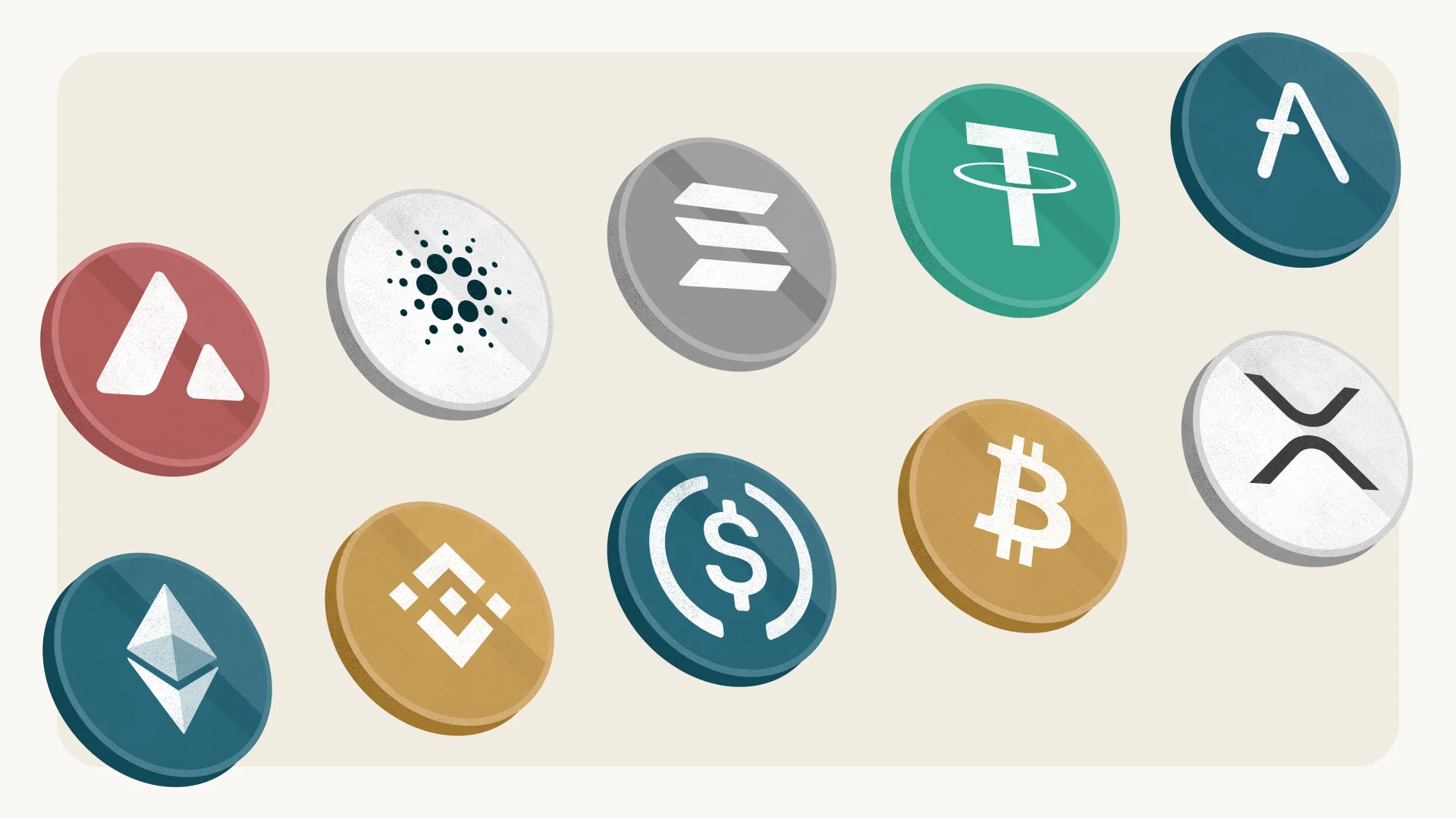
Your Options Compared
|
Method |
Fees |
Speed |
Watch out for |
|
Stablecoin on Tron |
Low |
Fast |
Receiver may need TRX to send onward from a wallet |
|
Stablecoin on Solana |
Very low |
Fast |
Receiver must support Solana |
|
Stablecoin on Ethereum layer 2 |
Low |
Fast |
Both sides must support the same layer 2 |
|
Stablecoin on Ethereum |
Higher |
Moderate |
Fees spike when the network is busy |
|
Bitcoin on-chain |
Varies with demand |
Minutes to hours |
Poor for small amounts when fees are high |
|
Bitcoin on Lightning |
Very low |
Seconds |
Both wallets must support Lightning |
|
Internal transfer on an exchange |
Often free or near free |
Instant |
Both people must use the same exchange |
Why Stablecoins Win for Most People
Bitcoin moves in price. So does everything else. If you send Bitcoin and the receiver sells an hour later, the price may have shifted.
A stablecoin tracks a currency, usually the US dollar. It holds still. The amount you send is the amount they value. For a payment, that matters more than the fee.
How to Cut the Cost, Step by Step
1. Ask the receiver which network and coin they can accept. Everything starts here.
2. Buy with a bank transfer. Card purchases cost more.
3. Use a limit order, not a market order, if the exchange offers one. Fees are often lower.
4. Compare the withdrawal fee for each network. It is shown on the withdrawal page. Pick the cheapest network that the receiver supports.
5. Copy the address with care. Match the network. Add the memo or tag if one is needed.
6. Send a small test amount. Wait for it to arrive.
7. Send the rest.
8. Tell the receiver to compare cash-out options before they sell.
Do Not Forget the Last Mile
The cheapest transfer in the world still has to reach a bank account, a mobile wallet or a pocket of cash.
The receiver needs a way to turn crypto into local money. That could be a local exchange, a peer-to-peer platform or a crypto card. Prices differ a lot from country to country. Before you send, ask what the cash-out will cost them. It can decide the whole question.

Rules You Should Know
• Identity checks. Most regulated exchanges must collect details about the sender and the receiver. In the EU and other regions this is known as the Travel Rule. You may be asked who you are sending to.
• Taxes. Sending crypto between your own wallets is usually not a taxable event. Selling it often is. Check the rules in both countries.
• Limits. Exchanges set daily and monthly withdrawal limits. Check them before you plan a large transfer.
Mistakes That Cost Real Money
• Choosing the wrong network. Read our guide to sending crypto on the wrong network.
• Sending Bitcoin on-chain for a small amount during a busy period.
• Forgetting that the receiver needs a little native coin for gas.
• Ignoring the spread. A fee shown as zero can hide a bad exchange rate.
• Skipping the test transaction.
The Bottom Line
Pick a stablecoin. Pick a cheap network the receiver supports. Add up every fee, not just one. Send a small test. Then send the rest.
 Written by Nikolas Sargeant
Comments
Log in to post a comment
No comments yet
Be the first to share your thoughts!