 Hassan Maishera

KuCoin has secured regulatory approval to operate in Europe under the European Union’s new crypto framework, a move that quietly but decisively reshapes its position in the region.
The approval allows the exchange to serve users across most EU countries through a regulated European entity. Until now, much of that activity lived offshore, in the familiar crypto gray zone where scale often grew faster than rules. That arrangement worked—right up until it didn’t.
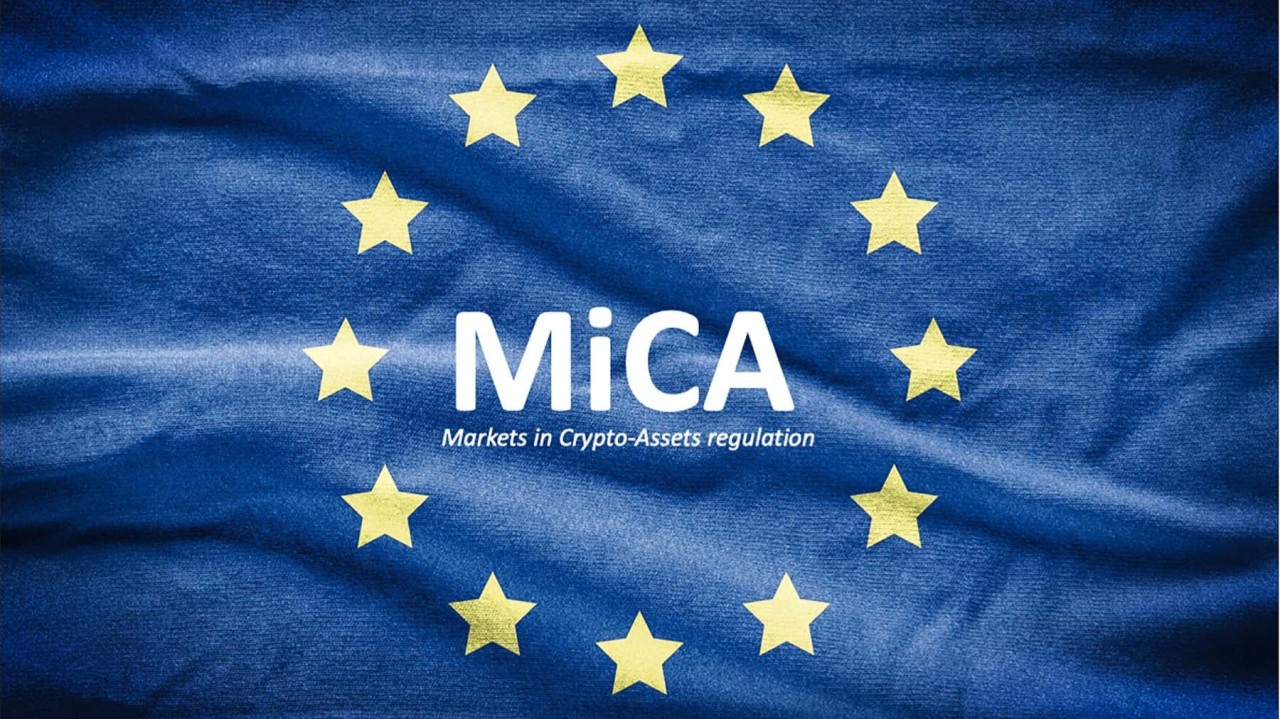
The authorization comes under the Markets in Crypto-Assets Regulation, better known as MiCA. It is the EU’s first unified rulebook for crypto companies, built to replace fragmentation with structure and improvisation with compliance.
For readers who don’t closely follow crypto regulation, the takeaway is straightforward. Europe wrote the rules. KuCoin met them.
What Was Approved
The license was granted to KuCoin’s European subsidiary by Austria’s financial regulator.
Under MiCA, approval in one EU country opens access to most of the European Economic Area. Instead of juggling national regulators and uneven standards, exchanges operate under a single framework. One rulebook. One system.
For KuCoin, this creates something it previously lacked in Europe: a stable legal base inside the EU.
That stability matters, especially for an exchange that already operates at global scale. Growth without structure is fragile. MiCA changes that equation.
Why MiCA Changes Things
For years, crypto regulation in Europe was uneven by design or neglect. Some countries enforced strict requirements. Others barely enforced anything at all. Many exchanges learned how to survive between the lines.
MiCA was designed to erase those lines.
The framework introduces shared standards for custody, governance, transparency, and consumer protection. It also gives regulators clearer authority over platforms operating across borders. The ambiguity that once defined the market is being replaced by something more formal—and harder to ignore.
Compliance brings costs. It always does. But clarity brings its own advantages.
KuCoin’s decision to secure approval suggests the company views Europe as a long-term market worth committing to, not a jurisdiction to approach cautiously or temporarily. That approach aligns with a broader shift across the industry as major platforms adjust to a more regulated future.
What KuCoin Can Offer Under the License
With authorization in place, KuCoin’s European entity can provide core exchange services, including trading, custody, and transaction execution.
For users, the experience should remain familiar. The platform’s tools, liquidity, and range of supported assets do not disappear overnight. What changes is the structure behind them.
Services are now delivered through a regulated EU entity, backed by governance and compliance standards that regulators can audit rather than speculate about.
Over time, those requirements may become more visible. That is expected. The trade-off is continuity. KuCoin can now operate in Europe with fewer regulatory question marks hanging overhead.
How KuCoin Compares to Other Exchanges
KuCoin is not alone in making this move.
Other major exchanges have secured MiCA approval, including Coinbase, Kraken, Bitpanda, Crypto.com, OKX, Bitvavo, and Bybit’s European operation. Across the EU, dozens of crypto firms have entered the regulatory system, while others remain in transition or on the sidelines.
That distinction is becoming harder to ignore.
As enforcement tightens, licensed exchanges gain room to operate and expand. Unlicensed platforms face increasing pressure. In that environment, KuCoin’s early compliance places it alongside established global players rather than outside the system looking in.
KuCoin at a Glance
KuCoin enters this next phase from a position of scale rather than experimentation.
The exchange serves millions of users worldwide and is widely known for its broad range of listed assets, including early-stage and emerging tokens that often appear there before reaching larger platforms. That breadth has made KuCoin a regular destination for traders looking beyond the most established names.
Liquidity has been a core part of that appeal. Across major trading pairs, KuCoin has maintained consistent depth, supported by a global user base and infrastructure designed for high-volume activity. Over time, the platform has expanded beyond spot trading to include derivatives, staking, lending, and other services common to full-scale digital asset exchanges.
MiCA does not reinvent KuCoin’s offering. It puts a formal framework around it.
By placing these services inside a regulated European entity, KuCoin aligns its existing scale with regulatory structure. For European users, that combination—breadth, liquidity, and oversight—brings the platform closer to the standards expected of established financial institutions, without stripping away what made it competitive in the first place.
What European Users Are Likely to Notice
For users in the EU, changes are likely to arrive gradually.
Identity verification may become more thorough. Compliance checks may take longer. Processes may feel more formal. This is the natural consequence of regulation asserting itself.
In return, users gain clearer legal protections, stronger oversight of custody practices, and a lower risk of sudden service disruptions tied to regulatory action. For many, that balance has become easier to accept as the market matures.

Part of a Broader Shift
KuCoin’s approval reflects a wider change across the crypto industry, particularly in Europe.
The era when large exchanges could rely on regulatory ambiguity is ending. MiCA has made expectations explicit, and the responses have been revealing. Some platforms have moved quickly to comply. Others are still adjusting, reassessing, or quietly retreating.
By securing approval, KuCoin has made its position clear.
It has chosen to anchor its European operations inside the regulatory system rather than operate around it. That choice brings constraints, but it also brings continuity, credibility, and access to one of the world’s most structured financial markets.
In the short term, the shift may feel incremental. In the long term, it places KuCoin on firmer ground as Europe’s crypto market continues to formalize.
This is not the end of the story, but it is a clear marker. In Europe’s next chapter of crypto regulation, KuCoin will not be watching from the sidelines. It will be operating inside the framework—deliberately, and with its footing set.